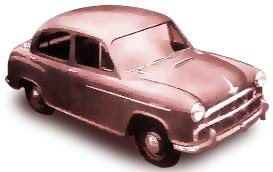
1957
Hindusthan Landmaster

The
following people got the answer correct:
Colin
Franklin (Auckland, New Zealand),
Arjun Vasanth (Bangalore, India),
Rajiv P (Jaipur, India),
Shyam Krishnamachari (Hyderabad, India),
Anthony Verghese (Calcutta, India),
Rajeshpal Singh (Chandigarh, India),
Ritwik Kakati (Guwahati, India),
Dipak Sutaria (Rajkot, India),
Sudipto Ray (Kolkata, India),
Anish, Manek,
Sayeed Ahmed Jamadar (Belgaum, India),
Sajeev Thomas (Pune, India),
Namshith Hashim (Bangalore, India),
Arjun R (Coimbatore, India),
Suman Dutta Mazumder (Kolkata, India),
Mahendra Singh (Faridabad, India),
Ritu Berani (Mumbai, India),
Gerard Fernandez (Mumbai, India),
Abhijeet Girsavle (Bhopal, India),
Karl Bhote (Pune, India),
Bala Subra Manian (SALEM, India),
Shri Kant Gupta (Noida, India),
Sonali Advani (Pune, India).
PREVIOUS
CONTESTS
Contest: [1] [2]
[3] [4]
[5] [6]
[7] [8]
[9] [10]
[11] [12]
[13] [14]
[15] [16]
[17] [18]
[19] [20]
[21]
[22]
[23]
[24]
[25]
[26]
[27]
[28]
The
information about the 1957
Hindusthan Landmaster car was provided
by Mr.B.J.Ram Rao who is an avid auto enthusiast and has participated
and won almost all the Spot Car Contests that we have run.
You
can contact Mr.B.J.Ram Rao at -
|
Hindusthan Landmaster
The Birlas of India, began manufacturing Morris motor cars in
1942 at their Hindusthan Motor Works at Uttarpara, (Hooghly
dist.), West Bengal. The Baby Hindusthan (Morris Minor) and
its bigger brethren, the Hindusthan 10 (Oxford MO) and Hindusthan
14 followed.
The 1954 Morris Oxford series II was license-built at Uttarpara,
(Hooghly dist.), three years after its debut in England and
labelled as the 1957 Hindusthan Landmaster.
Succeeding the Hindusthan 14, it had more passenger room, more
luggage space and a new BMC (Austin designed) 1489 cc "B-series"
engine that developed a decent 50 bhp @4200 rpm and 78 lb ft
of torque @ 2400 rpm. The advertisements of the time made a
big deal of the new "Over Head Valve" OHV engine. There was
a chrome badge consisting of the letters OHV in capitals with
"wings" attached to the letter "V".
The Landmaster could cruise comfortably at 100 km/h with no
feeling of being pushed near the limit and peak out at 119 km/h.
The car had independent torsion bar front suspension and semi-elliptic
leaf springs at the rear. These gave a comfortable ride over
normal road surfaces, though the car would pitch over very rough
sections. It had a one-piece curved windscreen, raised air vent
on bonnet, and parking lights in the heavy chrome radiator grille
extremities, like its successor, the 1957 Mark I Ambassador.
The
Landmaster could seat six people in reasonable comfort. Its
2464 mm wheelbase gave adequate rear seat legroom for tall passengers,
even with the front bench at its rearmost. To facilitate three-abreast
front seating the steering column was offset so that it sloped
out from the longitudinal centre line of the car, when viewed
from above.
The
car could be had in grey, green, beige or black.
|

